
About James Shore
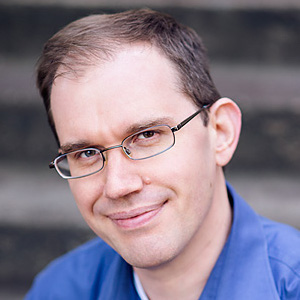
James Shore
I’ve always been interested in software success. Today, I’m a consultant who helps transform software companies when repeated fixes have failed. (Learn more here.) That journey started back in my teens.
From Technology...
As a teen, I loved to program. My biggest, most complicated program to that date was a D&D character creator written in Applesoft BASIC. (A rite of passage for every young nerd in the 80’s. I continue to play D&D today. Yep, still a nerd.) I was slinging variables, calling subroutines. It all fit together. And then, from one moment to the next, I lost it. The elaborate structure in my head fell apart, and I could no longer make sense of what I had built. I abandoned the program, unable to finish it. All my work, gone.
That experience was transformative. I wanted to know: how do we create software that lasts? That succeeds? I taught myself about structured programming languages, then learned about software processes in college. I read software engineering textbooks. For fun! When I entered the workforce, I was eager to put what I had learned into practice, and I quickly learned how the textbooks didn’t always translate to the real world.
I had the opportunity to lead a team early in my career, and I was determined to do it right. We followed all the best practices of the time, including iterative development and regular check-ins with our stakeholders. The software was a technical masterpiece... and a business failure.
My understanding of success grew. Technical excellence isn’t enough. Even regular conversations with stakeholders aren’t enough! Still, the iterative approach helped us to discover the gap early. Just not as early as we needed. If it didn’t work, maybe I wasn’t doing it enough.
...To Transformations
Extreme Programming (XP) turned stakeholder collaboration “up to eleven.” I was an early adopter, which led to speaking opportunities, a notable award1, and then my book, The Art of Agile Development. Each gave me opportunities to refine my understanding further.
1The Gordon Pask Award for Contributions to Agile Practice
XP was more successful than any other approach I’d tried, but companies hadn’t heard of it. So I became a consultant, determined to help others see the results I had. I led transformations, first at the team level, then across multiple teams, and then for whole organizations.
One of my most successful transformations was for a company with ~300 people in product and engineering. They had several dozen teams, and progress had stalled because of bottlenecks in cross-team collaboration. We redesigned team responsibilities around value streams, focused the whole organization on top product priorities, and conducted an innovative self-selection exercise to create teams that were excited to work together.
A participant later said, “From one year to the next, we went from hitting zero of the big three [priorities] to hitting at least the top ten, plus extras, having [also] spent all the time and effort to do the transformation. It was just a mind-blowing result at the end.”2
2Brent Miller on Upscale and team self-selection (quote at 41:46)
And, of course, there’s always room to improve. Every engagement has its highs and lows. On the plus side, that engagement well exceeded its goals; on the minus, it involved the disruption of a big organizational redesign. I wanted to find ways to make change safer and more incremental. My understanding of success evolved once again.
Operational Insights...
Twenty-three years into my consulting career, I had the opportunity to join OpenSesame as their Vice President of Engineering. OpenSesame wanted big changes and I wanted the opportunity to make a difference over the long term. It was the perfect match.
For three years, I immersed myself in the operational realities of leading from within. I was hired to transform product development, which was a familiar role from my consulting, but I had the benefit of being able to think long-term. I was able to work more incrementally than ever.
It also expanded my influence. I’ve always worked closely with Product and Engineering, but now I was able to collaborate with Sales, Partners, Finance, Marketing, and Customer Success. Something I’m most proud of is my work across all these functions to create a financial model for product accountability. We used it to prioritize a big initiative, and saw financial results well in excess of our baseline expectations.
I gained fresh empathy for the demands on a senior leader’s time. It was all too easy for my week to be broken up into disconnected meetings. Individually important, but not necessarily consequential. More than ever, I had to operate through others, working with my managers to develop people and build an organization that could excel without our constant involvement.
There’s so much I could say about my time at OpenSesame. Changing culture. Breaking down silos. Navigating company politics. Contributing to company strategy. Responding to the sea change of AI, both in our products and our engineering practices. Succession planning. Budgeting, tracking, and advocating for investment. More.
In short: it was a rich environment for learning, and my understanding of success grew even further.
...Leading to Consulting Depth
I’ve returned to consulting with new perspectives on operational excellence, executive accountability, and the pressures facing leadership. It’s the next stage in my lifelong pursuit: what makes software successful? And how do we make it successful?
On this site, and in my work, I explore success. Thank you for joining me. If you’d like me to help your company, let’s talk.